
The Three-Org Model
The Three-Org Model is an organizational architecture designed for Value-Led Growth. It replaces traditional functional silos with three unified organizations, each with clear purpose and accountability.
Traditional organizations fragment value creation across functional silos—marketing generates, sales closes, delivery implements, account management retains. Each optimizes their stage while customers experience handoffs, context loss, and organizational friction.
- Status
- canonical
- Cite
- valuecreationprotocol.com/three-orgs
- Source
- Generated from the canonical reference and checked against it on every build
Customer Org
Everyone who creates and delivers value to clients
Purpose
Everyone who touches the value journey—from first signal recognition through championship. No artificial splits between "getting" customers and "keeping" customers.
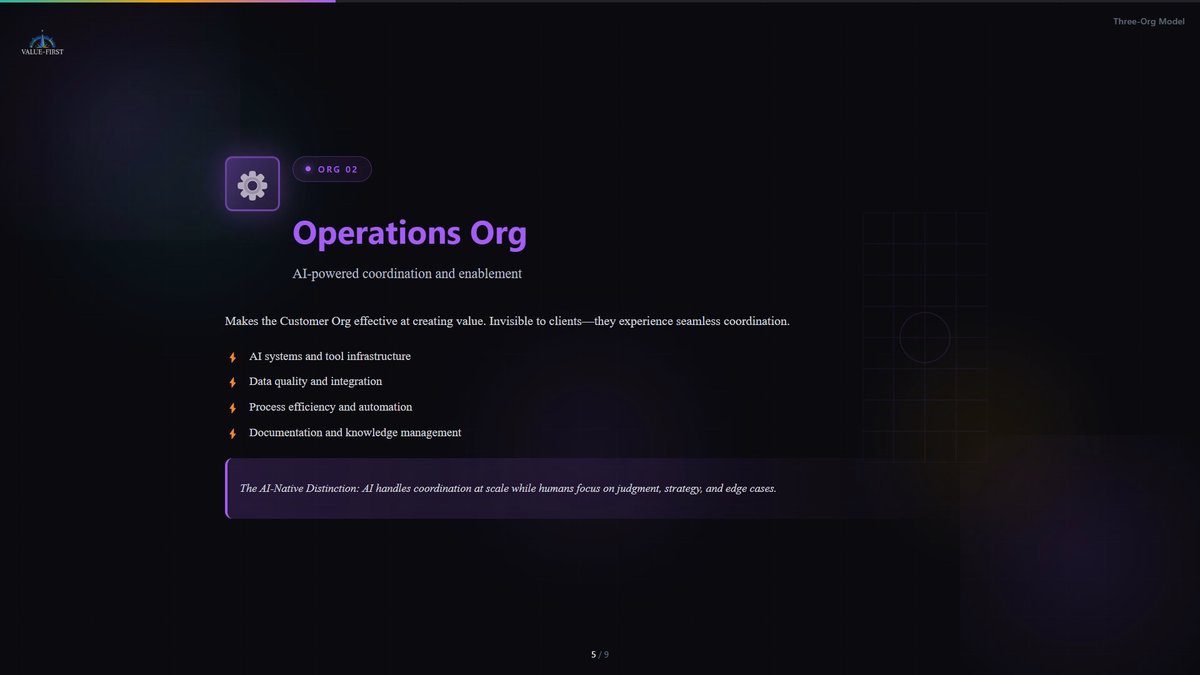
Operations Org
AI-powered coordination that enables the Customer Org
Purpose
AI-powered coordination and enablement that makes the Customer Org effective at creating value.
Finance Org
Resource stewardship and value accounting
Purpose
Resource stewardship and value accounting—not just tracking money, but measuring value delivered.
The Three-Org Model eliminates that complexity. The Customer Org owns the entire Value Path. The Operations Org handles coordination complexity. Finance stewards resources. Three orgs. Three leaders. One mission: maximize value created and received across all relationships.
Protocol home
VCP is originated and canonically implemented by Value-First Team. Anyone may read, cite, and operate the protocol independently of firm engagement.